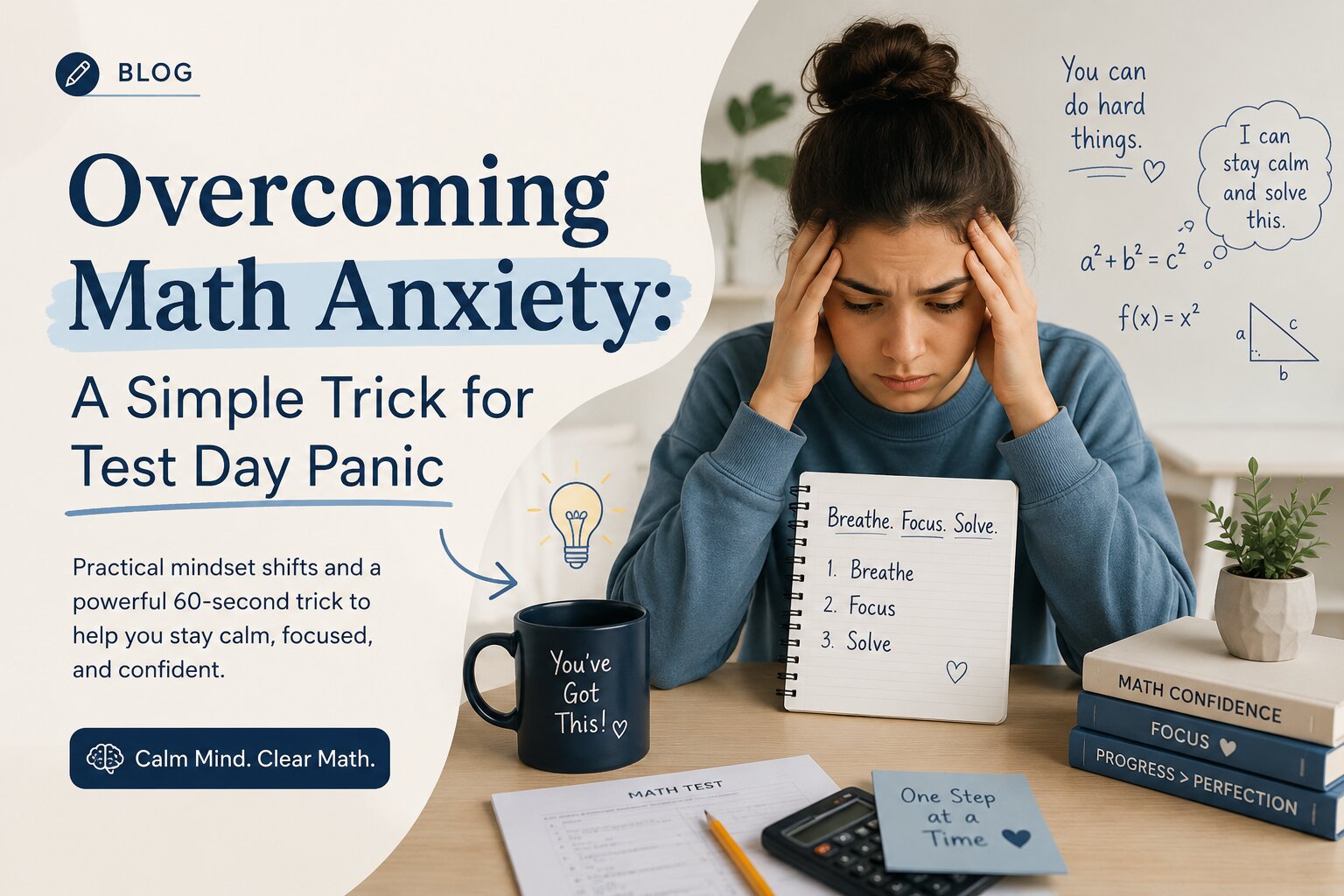
Overcoming math anxiety starts the moment a kid's mind goes blank in front of a worksheet they could've solved five minutes earlier at the kitchen table. You know the scene. Last week we zipped through a subtraction shortcut, and if you tried it with your student, you probably noticed something funny happen the first time a harder number showed up. Their hand froze. Their pencil hovered. Suddenly a trick they'd already proven they could do felt impossible. That's not a math problem. That's a brain problem, and it's one we can actually fix.
Here's what's really going on under the hood. When a student feels threatened by a math question, even a totally solvable one, their brain treats it almost like a physical danger. Stress hormones flood in, and working memory (the mental scratchpad you need for holding numbers in place while you calculate) gets crowded out. This is why a capable kid can bomb a quiz on material they nailed the night before. It isn't a knowledge gap. It's a traffic jam between what they know and what they can access under pressure, and once you see it that way, the fix stops looking mysterious.
Advertisement
So How Do We Actually Calm This Down
Notice the Body Before the Brain
The first move in overcoming math anxiety has nothing to do with numbers at all. It's about noticing the physical tell before the panic fully lands. Maybe it's a tight jaw, maybe it's cold hands, maybe it's that stomach drop right as the teacher says pencils down and pick up. One of my Tuesday afternoon students used to tap her foot so fast under the desk you could hear it from across the room. Once she learned to name that as her signal (not danger, just adrenaline showing up early), she could pause and reset before the freeze even started.
Rename the Feeling on Purpose
Once a student catches the physical signal, the next step is swapping the story their brain is telling them. Psychologists call this reappraisal, and it's simpler than it sounds. Instead of thinking I'm panicking, I'm going to fail, the student practices saying I'm amped up, and that means I'm ready to focus. Sounds almost too easy, but studies on test anxiety keep landing on the same finding, that relabeling nervous energy as excitement measurably improves performance, because you're not fighting the feeling anymore. You're just pointing it somewhere useful.
Anchor With One Guaranteed Win
The last piece is what actually stops the spiral in real time, and it's ridiculously low tech. Before touching the hard question, the student answers one they already know cold, even something as basic as three plus four. That tiny, guaranteed success sends a signal to the brain that says see, you can still do this, and it buys back a sliver of working memory the anxiety had grabbed. Chain two or three of these easy wins together and most kids can walk right back into the harder problem with their hands steady again.
Advertisement
Making the Calm Stick, Not Just Show Up Once
None of this works as a one-time pep talk. It has to become a rehearsed habit, the same way the subtraction trick from last week only clicked after real repetition. For students, that means practicing the physical-signal check during easy homework, not saving it for the night before a big test when everything already feels high stakes. Try setting a timer for two minutes of untimed practice problems purely to notice how calm feels in the body, then compare that to how a rushed problem feels. Teachers can build this into a thirty second morning starter, a quick this problem is easy, this one might not be pairing before the real lesson begins. Parents, you don't need worksheets for this part. Just ask at dinner what felt hard today and let your kid talk it through out loud, since saying the anxious thought aloud tends to shrink it faster than silently stewing on it ever does.
That's a real milestone, by the way. You've now got both a calculation tool and an emotional tool in the same toolbox, and honestly the second one might matter more long term. Confidence built this way tends to outlast any single trick, because it changes how a kid meets the next hard problem instead of just solving the one in front of them. Next week we're switching gears completely and getting into top 5 math games for the classroom, so if today felt a little heavy, get ready for something a lot more playful.